


The Danger Zone You
Drive Through Every Day
Cross-Border Truck Traffic & Personal Injury Risk in Niagara County, NY
The Question Every Niagara County Driver Should Be Asking
We analyzed four major government datasets — Bureau of Transportation Statistics border crossing records, FMCSA Large Truck and Bus Crash Facts, NHTSA's Fatality Analysis Reporting System, and the NY DMV/ITSMR Traffic Safety Statistical Repository — to answer a question that matters to every driver in Niagara County:
How dangerous are the roads around the busiest truck crossing corridor on the US-Canada border — and what does the law say about who is responsible when something goes wrong?
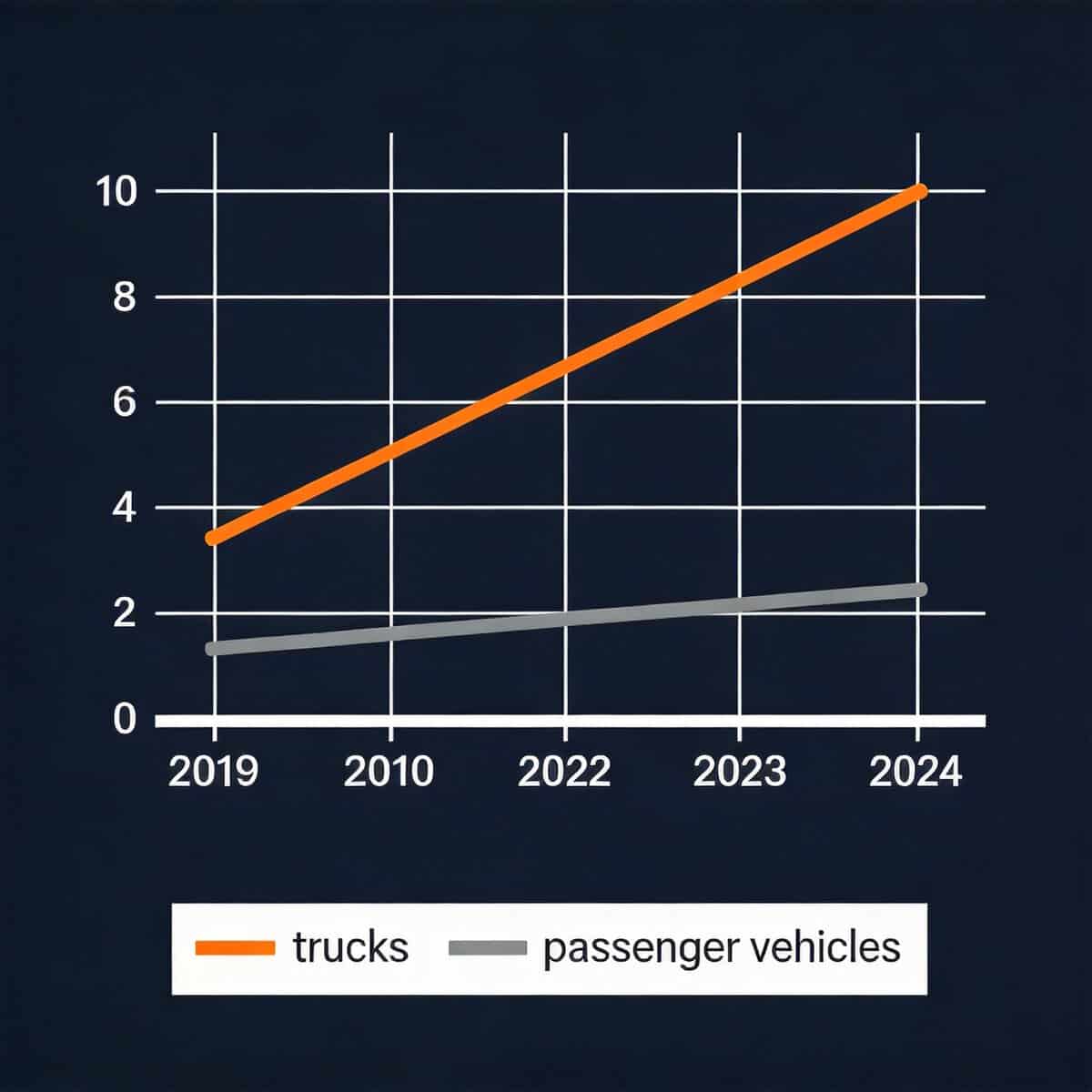
Buffalo-Niagara is the #1 commercial truck crossing port in New York State, processing roughly 890,000 inbound trucks per year — about one every 35 seconds. Those trucks are the only form of border transportation that has not just recovered from the pandemic, but exceeded pre-pandemic levels. Meanwhile, passenger car crossings have dropped nearly 40% in 2025 due to US-Canada trade tensions. The result: Niagara County roads now carry a higher proportion of commercial trucks than at any point on record.
Here's what we found.
For every 6 people killed in a large truck crash, 5 are ordinary drivers — not the trucker. (82.4% of all large truck crash fatalities are non-truck occupants.)
Large truck crashes are 4.4× more likely to be fatal than the average vehicle crash — a 2.7% fatality rate vs. 0.61% for all vehicles.
Buffalo-Niagara is NY's #1 commercial truck port — ~890,000 trucks per year, one every 35 seconds.
Commercial truck crossings are the only border mode exceeding pre-pandemic levels — up 6.1% vs. 2019.
Passenger car crossings dropped ~40% in early 2025 while truck volume held flat. Trucks now dominate Niagara road traffic.
83 out of 100 large truck crashes in New York State are caused by human error — preventable.
New York sees 45 large truck crashes every day — roughly 14 per day result in injuries.
76% of fatal truck crashes happen Monday–Friday — the same days border traffic peaks.
Large truck injury crashes are up 11% nationally over six years — 112,000 to 124,000 per year (2016–2022).
New York ranks in the top 10 states nationally for injury-causing large truck crashes.
Unrepresented victims average $103,654 in settlements. Represented victims with serious injuries: $4.4M+. That's a 42-to-1 gap.
5 Out of 6 Truck Crash Fatalities Are Ordinary Drivers
Most people instinctively assume that large commercial trucks pose the greatest danger to the drivers operating them. When you picture a serious truck crash, it's natural to imagine the trucker as the one absorbing the force of the collision.
Federal data tells a very different story. According to FMCSA 2023 preliminary data, 82.4% of all people killed in large truck crashes were not in the truck. Of the 5,472 total fatalities in large truck crashes that year, 4,511 were occupants of smaller vehicles, pedestrians, or cyclists.
For every 6 people killed in a crash involving a large commercial truck, 5 are ordinary drivers — not the trucker.
The asymmetry has a straightforward physical explanation. A fully loaded commercial truck can weigh up to 80,000 pounds — roughly 20 to 25 times the weight of the average passenger car. When these vehicles collide at highway speeds, the smaller vehicle absorbs a disproportionate share of the kinetic energy. The people inside the truck are largely protected by the mass of the vehicle around them. The people in the car are not.

Large Truck Crashes Are 4.4× More Deadly Than Average
Not all vehicle crashes carry the same risk. A rear-end collision in slow-moving traffic is categorically different from an impact with a fully loaded 18-wheeler traveling at highway speed. The question is how to quantify that difference — and what the numbers actually show.
According to FMCSA 2024 preliminary data and the NHTSA 2023 crash census, the fatality rate for large truck crashes is 2.7% — compared to 0.61% for all vehicle crashes combined.
Large truck crashes are 4.4 times more likely to result in a death than the average vehicle crash.
The gap reflects both the physics of mass-differential collisions and the nature of highway freight routes. For drivers on I-190 or Route 62 in Niagara County — corridors that carry both high volumes of commuter traffic and significant commercial freight — this difference in risk is not abstract.

One Commercial Truck Enters Niagara County Every 35 Seconds
Most local drivers have a general awareness that the Niagara border crossings handle significant commercial traffic. The actual volume — expressed as a time-based rate rather than an annual total — tends to reframe how people understand the scale of that activity.
According to Bureau of Transportation Statistics border crossing data, Buffalo-Niagara processed approximately 890,000 inbound commercial trucks in 2023, making it the highest-volume commercial truck crossing port in New York State.
One commercial truck crosses into Niagara County from Canada every 35 seconds — day and night, 365 days a year.
These aren't light delivery vans. The vehicles counted in BTS border crossing data are commercial freight carriers — tractor-trailers, tanker trucks, flatbeds, and other large commercial vehicles subject to federal motor carrier regulations. Once they clear customs, they disperse onto I-190, Route 62, the Robert Moses Parkway, Grand Island Boulevard, and other Niagara County roads.

Niagara Truck Traffic Has Surpassed Pre-Pandemic Levels — Everything Else Hasn't
The COVID-19 pandemic caused massive disruption to all forms of cross-border transportation in 2020 and 2021. Understanding how different modes of border traffic have recovered since the pandemic gives important context for the current risk environment on Niagara County roads.
BTS's 2025 Annual Border Crossing Data release shows that commercial truck crossings at Buffalo-Niagara are now running 6.1% above their 2019 pre-pandemic baseline. No other mode of border transportation has fully recovered — passenger vehicles, rail, pedestrians, and bus passengers all remain below 2019 levels.
Commercial truck traffic is the only border mode that has not only recovered from the pandemic — it has surpassed pre-pandemic levels entirely.
Today, trucks represent a larger proportion of the cross-border mix than they did before the pandemic — and that concentration is happening on the same local road network that residents, commuters, and school buses use every day.
While Car Traffic Dropped 40%, Trucks Kept Moving — And Now Dominate the Roads
The US-Canada trade relationship entered a period of significant tension in early 2025, following tariff announcements and counter-measures that affected cross-border consumer and recreational travel. While commercial freight relationships involve longer-term contractual obligations that are harder to pause, individual consumer travel responded much more quickly.
BTOA data shows that passenger vehicle crossings at Niagara bridges dropped approximately 40% in early 2025 compared to the same period in 2024. Commercial truck volume remained essentially flat — down only about 1.2%.
Car traffic at Niagara crossings dropped 40%. Truck traffic held steady. Trucks now make up a larger fraction of total Niagara crossing traffic than at any point in recent history.
For a local driver commuting on Route 62, I-190, or any of the regional arterials that connect to the border crossings, the practical effect is a road environment with proportionally more 80,000-pound commercial vehicles and fewer passenger vehicles sharing the same lanes. The roads haven't changed. The traffic composition has — and the statistical risk profile has shifted with it.
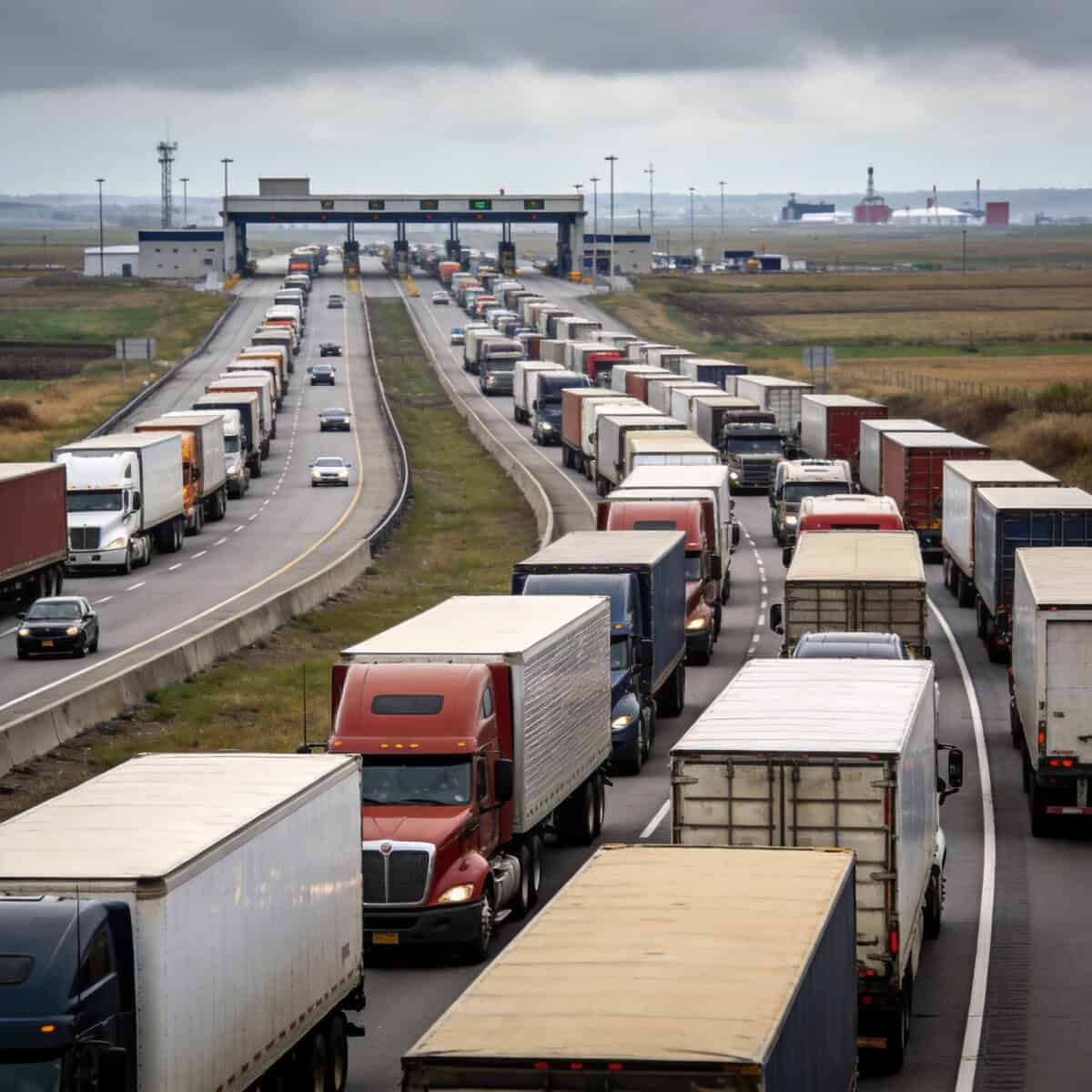
83% of NY Large Truck Crashes Were Preventable Human Errors
When a large truck crash occurs, establishing the cause is essential — both for public safety analysis and for understanding the legal rights of the people who are injured. The question of whether a crash was caused by something preventable determines whether injured victims have a legal path to compensation.
Source: NY DMV / ITSMR Traffic Safety Statistical Repository
In New York personal injury law, the concept of negligence is the foundation of a victim's right to recover compensation. When a crash is caused by a driver who was distracted, fatigued, or driving aggressively — or by a trucking company that failed to maintain its vehicles — there is a legally responsible party. The 83% human error rate means the overwhelming majority of large truck crash victims have grounds for a legal claim worth pursuing.
New York Has 45 Large Truck Crashes Every Day — 14 of Them Hurt Someone
Annual crash statistics — figures in the tens of thousands — can be difficult to connect to everyday risk. Converting statewide annual totals into a daily rate makes the frequency of these events more concrete.
Source: ITSMR statewide crash data, 2021
These crashes concentrate along the state's major commercial freight corridors — I-90, I-87, I-81, and I-190. Niagara County sits at the intersection of the I-190 corridor and the entry point for New York's highest-volume commercial truck border crossing. The local risk along these commercial corridors is higher than the statewide average.
3 Out of 4 Deadly Truck Crashes Happen on Weekdays — Peak Border Days
The timing of large truck crash fatalities — specifically which days of the week they are most likely to occur — is not random. It follows the rhythm of commercial freight activity, which is particularly relevant for communities like Niagara County where truck volume tracks closely with the commercial shipping calendar.
FMCSA data on fatality distribution by day of week shows that 76% of all fatal large truck crashes occur Monday through Friday.
3 out of 4 deadly truck crashes happen Monday through Friday — the exact days when Niagara's border crossings are at peak commercial volume.
The days when Niagara County residents are most likely to be on local roads — Monday through Friday, during morning and afternoon commuting hours — are the exact same days when commercial truck traffic at the border is at its highest, and when fatal large truck crash risk is statistically concentrated.

Truck Injury Crashes Are Up 11% in Six Years — and Still Climbing
One of the most consequential questions about any safety risk is whether the situation is improving or getting worse over time. For large commercial truck crashes in the United States, the national trend over the past decade provides essential context.
FMCSA annual report data documents that large truck injury crashes climbed from approximately 112,000 per year in 2016 to approximately 124,000 per year in 2022 — an increase of roughly 11% over six years. That is approximately 12,000 more injury-producing truck crashes per year than just six years prior.
Large truck injury crashes increased by 12,000 per year between 2016 and 2022. The trend has not reversed.
Growth in e-commerce has driven sharply higher freight demand, creating pressure on carriers and drivers. Driver shortages in the commercial trucking industry have made scheduling pressure more common. The directional trend is unambiguous — large truck injury crashes are becoming more common, not less. Niagara County is not insulated from that trend.
New York Is a Top-10 State for Large Truck Injury Crashes
State-level rankings in large truck crash injury rates help establish whether a particular location faces above-average, average, or below-average risk compared to the broader national baseline. Some states — by virtue of population density, interstate freight corridor concentration, or active international border crossings — experience disproportionately high rates.
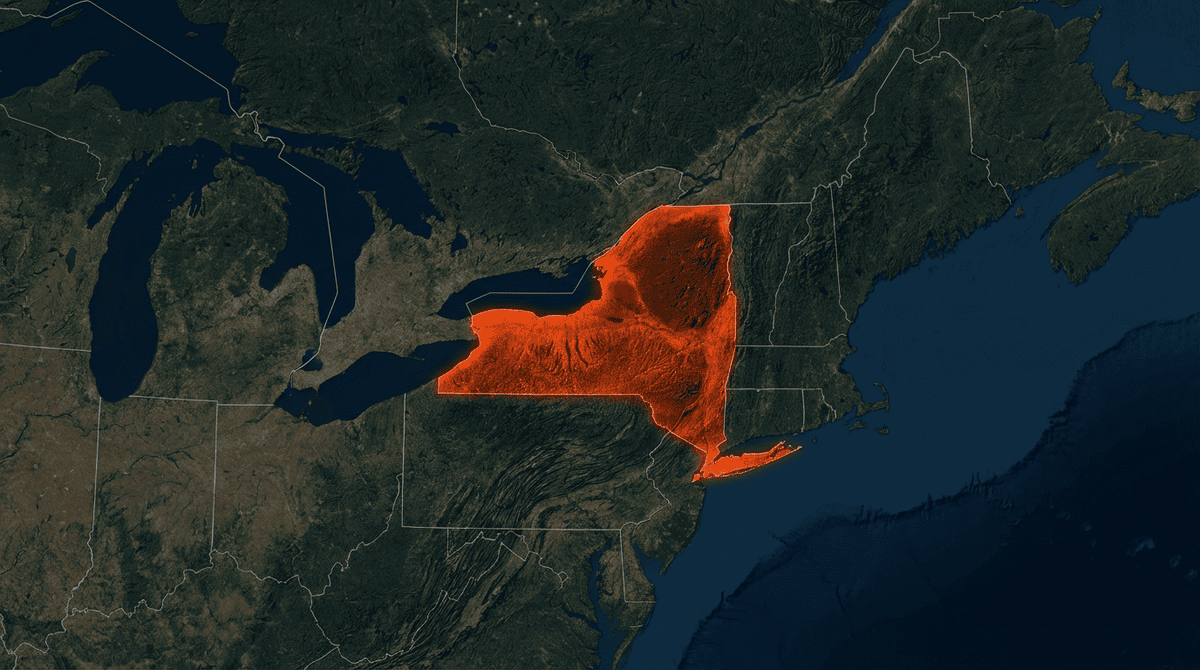
New York ranks in the top 10 states nationally for injury-producing large truck crashes, according to FMCSA state-level crash rankings corroborated by ITSMR data.
New York is a top-10 state for large truck injury crashes in the United States.
Niagara County is not simply a recipient of this statewide risk — it is one of its primary entry points. The 890,000 annual commercial truck crossings at Buffalo-Niagara represent a meaningful share of the freight volume that drives New York's national ranking.
Victims Without a Lawyer Get 42× Less — The Data Is Clear
Being involved in a large truck crash is a disorienting experience. Victims face immediate medical decisions, vehicle damage, lost income, and in many cases, injuries that require months or years of ongoing care. In that context, the question of whether and how to pursue legal compensation carries enormous practical consequences.
Legal industry research shows that unrepresented truck accident victims settle their claims for an average of $103,654. Victims with serious injuries who pursue legal representation recover $4.4 million or more in documented settlements and verdicts.
Unrepresented victims average $103,654. Represented victims with serious injuries recover $4.4M+. That's a 42-to-1 gap.
Large trucking companies and their insurance carriers have dedicated legal teams whose primary function is to minimize claim payouts — often by securing early settlements before the full extent of a victim's injuries is known. An experienced personal injury attorney familiar with commercial vehicle litigation can calculate long-term damages accurately, identify all liable parties, and negotiate from a position of legal knowledge. The 42-to-1 ratio in the data is not an anomaly — it is a consistent reflection of what legal representation is worth in truck accident cases.

The Data Is Clear — Know Your Rights
Niagara County roads carry more commercial truck traffic per capita than almost anywhere else in New York State — and the consequences when those trucks are involved in crashes are overwhelmingly borne by ordinary drivers, not the truck operators.
The data in this report is drawn from federal and state government sources including the Bureau of Transportation Statistics, Federal Motor Carrier Safety Administration, National Highway Traffic Safety Administration, the New York State DMV / ITSMR Traffic Safety Statistical Repository, and the Niagara Falls Bridge Commission. All datasets are publicly available and are among the most widely cited sources in transportation safety research.
If you or someone you know has been involved in a truck accident in Niagara County, understanding your legal rights can make a significant difference in your outcome. Our data found a 42-to-1 gap between settlements for unrepresented victims and those with serious-injury legal representation.
Get a Free Consultation ☎ (716) 321-2727